










Does Vinegar Kill Ants? What It Actually Does, and What It Doesn’t
Vinegar kills the individual ants it soaks, and it wipes out the invisible pheromone trail they were following. What it does not do is touch the colony, which is where the other several thousand ants and the queen are. So the trail disappears for a few hours, sometimes a day, and then a new one appears slightly to the left. If you want the ants gone rather than moved, you need something the workers carry home.
This question comes up more than any other DIY question I get, usually in July, usually from someone who has already tried it. So let me be straight about what is happening in your kitchen.
What vinegar actually does
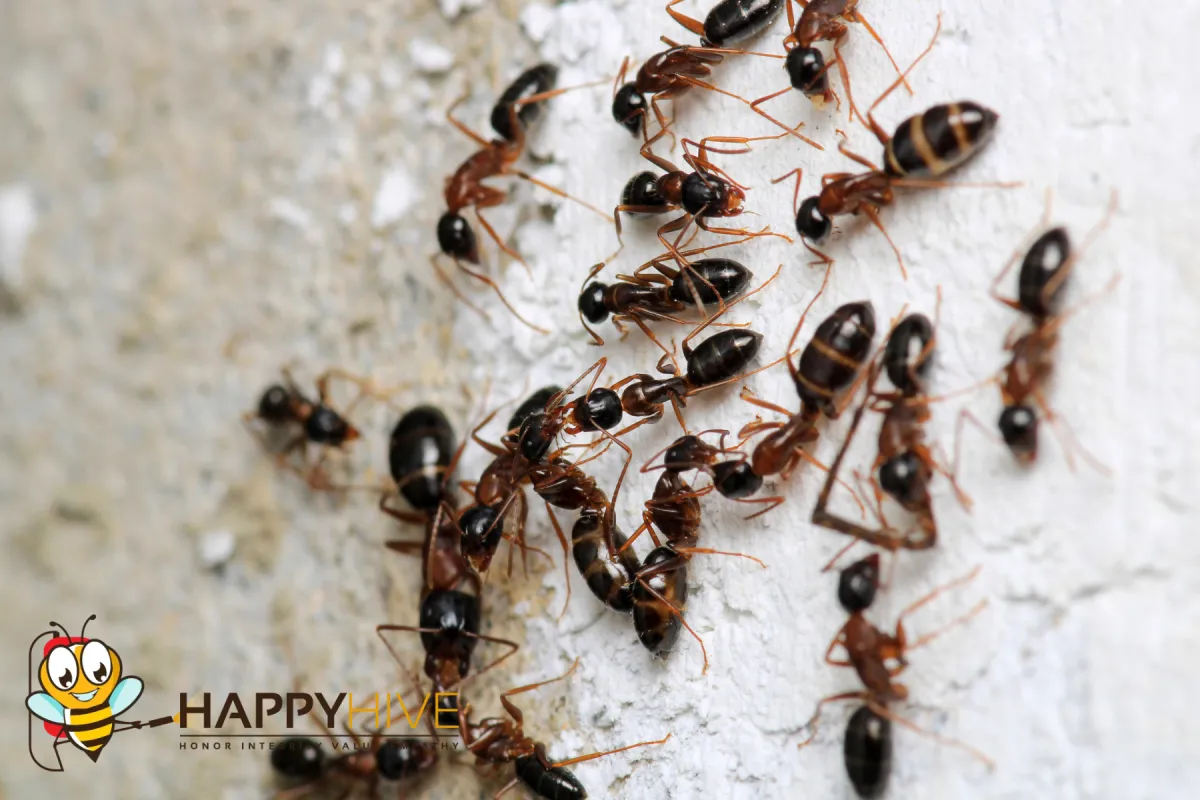
Ants find their way by laying down a chemical trail. One forager finds your dog bowl, walks back, and every ant behind her follows the scent. That is why they move in a line rather than wandering.
Vinegar is acidic enough to break that trail down. Spray the counter, the line vanishes, and the ants already on it lose the plot and scatter. It genuinely works, for about as long as it takes the colony to send out new scouts and find the same dog bowl by a slightly different route.
The National Pest Management Association had its entomologists test the popular internet ant hacks. Their senior vice president of public affairs, Dr Jim Fredericks, a board-certified entomologist, put it this way: “Ants live in colonies that can number into the thousands, and a quick surface fix doesn’t stop them; it redirects them.” Redirects is exactly right. That is the word for what vinegar does.
Why the ants come back a day later
Because you never met most of them. The ants on your counter are foragers, and foragers are a small fraction of the colony. The queen is somewhere else entirely, usually under a slab, in a wall void, or in damp wood outside, and she is producing replacements faster than you can spray.
Killing foragers feels productive. It is the pest control in Alexandria, KY equivalent of emptying the bin while the tap is still running.
What actually works
Slow-acting bait, and it works precisely because it is slow. The workers find it, decide it is food, and carry it back to share, which is what ants do with everything they find. By the time it acts, it has been passed around. That is the whole mechanism.
This is also why spraying kills baiting. If you have laid bait and then spray the trail with vinegar or anything else, you have just deleted the road the workers were using to carry it home. Pick one approach. If you are baiting, stop cleaning the trail.
On our own jobs, we use non-repellent products for the same reason, so the ants walk through the treated zone rather than avoiding it and carry it back with them. If you need an exterminator in Alexandria, KY, we can help determine the right approach for your ant problem. We wrote up why that matters over on the blog if you want the longer version.
Which ants are you actually dealing with?
Around Cincinnati, it is usually one of three, and they are not the same problem. Alexandria pest control can help identify which type of pest you’re dealing with and determine the right treatment approach.
- Odorous house ants. Small, dark, and they smell faintly of coconut or blue cheese if you crush one. These are the classic kitchen trail. Bait works well.
- Pavement ants. Coming up through cracks in a slab, a driveway or a patio, often with little piles of excavated sand. Also a bait job, usually placed outside.
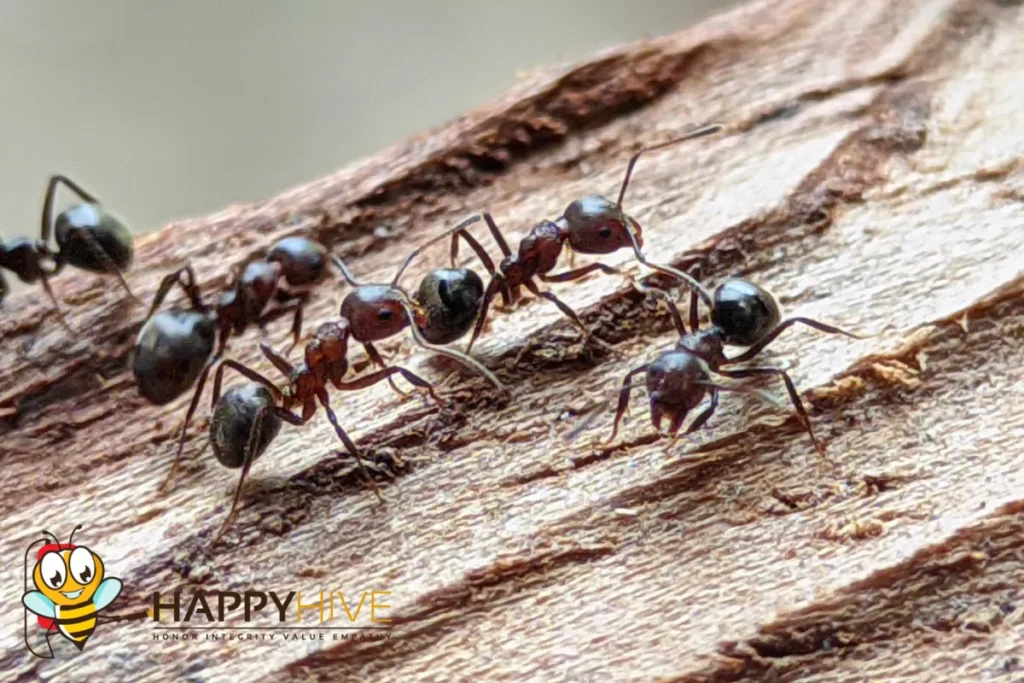
- Carpenter ants. Bigger, black, and the ones I actually care about. They do not eat wood; they hollow it out to nest in, and they nest in wood that is damp. If you have carpenter ants inside, my first question is where the water is, not where the ants are.
When vinegar is genuinely the right tool
Wiping the counter. That is not a joke. Once you have bait down somewhere sensible, cleaning the food-prep surfaces with vinegar is a reasonable thing to do; it is safe around food, and it stops new trails forming across the exact spot you want them to stay off. Happy Hive Pest Management can also help if the ant activity continues despite these steps.
Just do not confuse cleaning with control. One is housekeeping. The other is dealing with a colony you cannot see.
Been fighting the same ant trail for weeks? Call us today. We will find where they are actually coming from, and if it is something you can fix yourself, we will tell you that instead.
Questions people ask us about this
How long does it take for vinegar to get rid of ants?
It does not get rid of them. Vinegar wipes out the pheromone trail on the surface you sprayed, so the ants using that trail stop using it, usually within minutes. The colony is unaffected and will route around it, often within a day.
What kills ants the fastest?
Fast and effective are different questions. Anything that kills ants on contact, including vinegar, soapy water, and most sprays off a shelf, kills the ones you can see and leaves the colony producing more. Slow-acting bait works better precisely because it is slow: the workers carry it back before it acts.
Does Dawn dish soap kill ants?
Soapy water kills ants it directly coats by breaking down the waxy layer that keeps them from drying out. Same limitation as vinegar. You are killing foragers, which are a small and replaceable fraction of the colony.
So is vinegar useless?
No, it is useful for the wrong job. It is a good cleaner for wiping trails off a countertop while you deal with the actual colony, and it is safe around food prep areas. Treat it as housekeeping, not as control.
What ants am I likely to have in Cincinnati?
Most kitchen trails around here are odorous house ants, which smell faintly of coconut when crushed, or pavement ants coming up through slab cracks and driveways. Carpenter ants are the ones worth worrying about, because they are usually telling you about damp wood somewhere.